Monday, 1 February 2016

Of Mice and Men: Chapters 4 and 5


Task One:

Class reading page to the end of the chapter (page 94). As we read, underline synonyms for the following words or expressions.
Should page 93
To force someone to leave page 93
To become excited page 93
To figure something out (to understand/ plan) page 93
To be dispirited (lack of enthusiasm) page 93

Task Two:

Class reading of page 95 to 98 `…I get awful lonely’. Find synonyms for the following words and expressions.
1.Page 95 to take small bites of something
2.Page 95 to sing with closed lips
3.Page 95 to mock someone
4.Page 96 to caress/pet
5.Page 96 to put something over another
6.Page 96 sadly
7.Page 96 to start/increase
8.Page 96 to throw
9.Page 97 silently angry
10. Page 97 to look after

Task Three:
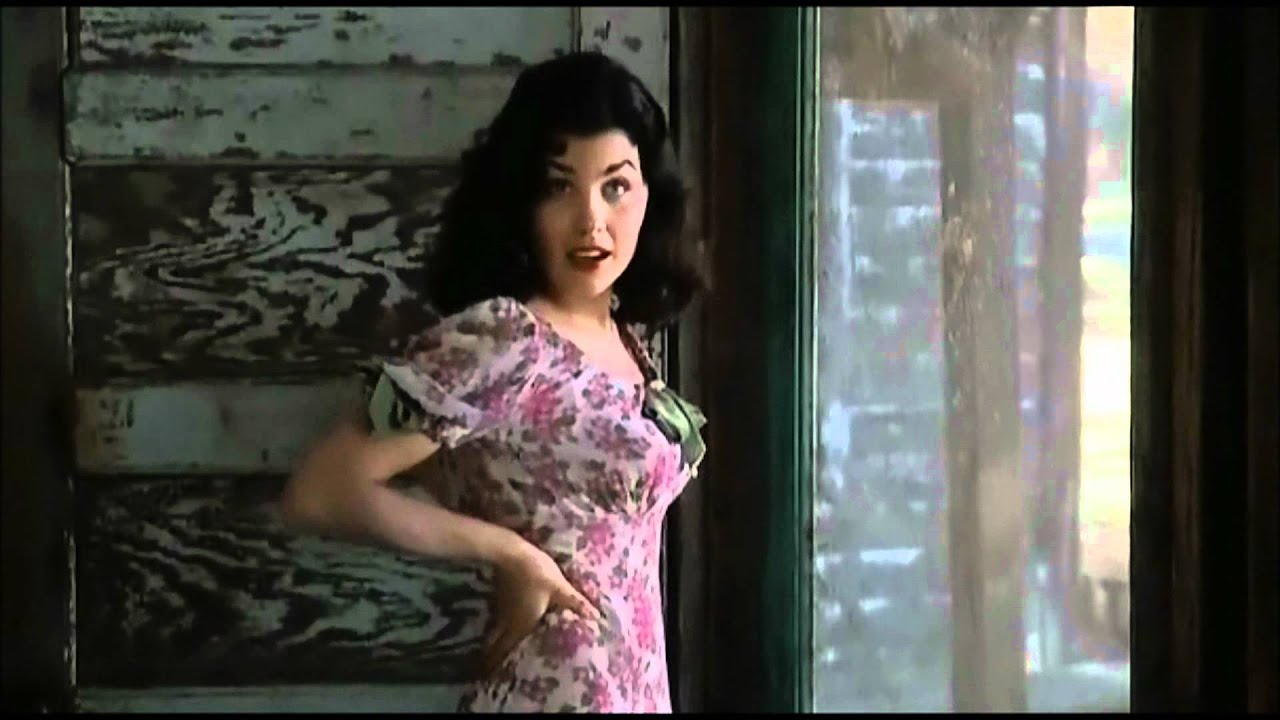
‘Why can’t I talk to you? I never get to talk to nobody. I get awful lonely’ (Curley’s wife)

1.Why is this quote grammatically incorrect?
2.What does this quote suggest about Curley’s wife?
3.Do you think she is being sincere?


Tuesday, 26 January 2016

Poetry Comparison


Copy and paste the following table into a Word document, and then complete it. 


 Out of the Blue

 The Manhunt 
 Quickdraw
 What happens? Three bullet points


 Type of conflict?


 Three examples of effective imagery


 Favourite line - why?


 Speaker's emotions in the poem? Prove this with a quote


Quickdraw, by Carol Ann Duffy

I wear the two, the mobile and the landline phones,
like guns, slung from the pockets on my hips. I’m all
alone. You ring, quickdraw, your voice a pellet
in my ear, and hear me groan.
You’ve wounded me.
Next time, you speak after the tone. I twirl the phone,
then squeeze the trigger of my tonge, wide of the mark.
You choose your spot, then blast me
through the heart.
And this is love, high noon, calamity, hard liqour
in the old Last Chance saloon. I show the mobile
to the sheriff; in my boot, another one’s
concealed. You text them both at once. I reel.
Down on my knees, I fumble for the phone,
read the silver bullets of your kiss. Take this …
and this … and this … and this … and this …
Carol Ann Duffy

Monday, 25 January 2016

Chapter 4: Crooks and the life of the African American

Click on the link below to help you to answer the following questions:


1.        The first African slaves arrived in Virginia.  In what year?

2.        A bit of Maths here – say the novel is set in 1930.  How long had there been slaves in America by this point?

3.        In what year was the importation of slaves from Africa banned in the USA?

4.        What is the name of the 1852 anti-slavery novel and who wrote it?

5.        Which president issued the ‘Emancipation proclamation’ – saying that all slaves were free?

6.        Would the character of Crooks have been born into slavery?  (Think about when it was banned.)

7.        In what year were black Americans actually recognized as citizens?

8.        What important right did black Americans get in 1870?


9.        In your own words, describe what happened in 1931 that may have influenced John Steinbeck when he wrote Of Mice and Men.

Thursday, 21 January 2016

The Manhunt, by Simon Armitage

Let’s take a closer look
Answer the following questions, providing quotes and analysis as necessary. Aim to use ALL of the following sentence openers:
•This suggests…
•This indicates that…
•It makes me feel that…
•The poet tries to convey to the reader the idea of…
•Therefore we understand that…
•This links to the speaker´s message that…
•The feeling is created by…

•This shows/proves/highlights….

Stanza 1
  1. What does the phrase ‘passionate nights and intimate days’ initially suggest the poem might be about? 
  1. What other meanings could ‘passionate’ and ‘intimate’ bring, given the context of the rest of the poem?
Stanza 2

1.     What does ‘only then would he let me trace’ imply?

2.     What might the metaphor ‘the frozen river which ran through his face’ be describing?

3.     What other meaning(s) could ‘frozen’ bring to the poem?

Stanza 3

1.     Why does the narrator use the word ‘explore’ – what connotations does it bring?

2.     The poem is broken up into two-line stanzas.  Why do you think Armitage has used this technique?

3.     What meaning(s) does the phrase ‘blown hinge’ add to the poem?

Stanzas 4-6
1.     Up to now, the couplets have been rhymed; why do you think that Armitage doesn’t rhyme all of the couplets?

2.     Is ‘porcelain’ a good word to describe his collar bone?  Explain your answer fully.

3.     What’s the effect of Armitage’s use of repetition of words and style in these stanzas?

Stanza 7
             1.     Armitage starts a new sentence in the poem here; why do you think he does so?

2.     How does this stanza suggest that the narrator is trying to help her husband recover?

Stanza 8
1.     What do you notice about the form of this stanza?  Why might this be important?


Stanzas 9-10
1.     Why does Armitage describe the bullet as a ‘foetus’?

Stanzas 11-12 
1.     What sorts of ‘scarring’ is the narrator talking about in these stanzas?

2.     How effective is the metaphor of the ‘mine’ in his mind?  What does the description of it as ‘sweating’ suggest about him?  How does it bring an association of danger?

Stanza 13
1.     What phrase suggests that the narrator is finding it hard to connect to the man?

2.     ‘Then, and only then, did I come close’: close to what?

3.     Look at the last words of each line of the couplet.  What reasons can you think of for Armitage choosing these?  Hint: think about the idea of things which are ‘missing’ or incomplete.


4.     How effective and appropriate is the poem’s title?  Explain your ideas fully.
Monday, 18 January 2016

Essay Writing: Useful Words and Phrases


Click on the link below and familiarise yourself with some of these key words and phrases. You should try to incorporate some of them into your own essay.

Friday, 15 January 2016

Crooks' Room: Essay Title and Planning Guide


TITLE/QUESTION: Explore what can be learnt about Crooks from the description of his room.

Consider:
  • His status
  • His character / personality
Every essay title contains an explicit or implicit question. Your essay should focus on answering that question.

INTRODUCTION: (about 10% of the essay)

  1. Your first sentence should include key words from the task title
  2. What issues/topics are you going to explore?
  3. What will be your focus?
  4. What will your essay show?

MAIN BODY (about 80% of the essay)

Use a chain of paragraphs to EXPLORE AND DEVELOP your ideas/argument.

You will probably have 2 or 3 main ideas to explore.
Each idea will need its own paragraph in which you will introduce the topic (through a topic sentence), and present examples and evidence to show why it is important and how it links to the essay title

In each paragraph the reader is asking you to explain:
  • What is this paragraph about?
  • What is your argument on this?
  • What is your evidence? (i.e. ensure you use relevant quotations from the text. Then explore what this reveals (think PEE)
  • How does it link to the essay title?
  • How does it link to the topic in the next paragraph?

CONCLUSION (about 10% of the essay)

  • Do not introduce any NEW material here.
  • Summarise your ideas/argument (you might also have done this in your introduction)
  • Restate what you consider to be the main points
  • Make it clear why those conclusions are important or significant.
  • In your last sentence: link your conclusions or recommendations back to the title.