Thursday, 31 March 2016

Storytelling: Key Features to Incorporate into Your Writing and Speaking

•Narrative structure
•Showing and not telling
•Direct speech
•Accurate use of past tenses
•Abverbs of frequency
•Adverbs of manner
•The four uses of ‘Should(‘nt) have’

Exam Schedule for Next Week

•Monday 4/4/16: Reading exam (*selected students)
–Two texts following a similar theme (900-1000 words in length in total)
•Wednesday 6/4/16: Writing exam – short story (*all students)
–About 300-400 words.
–You will be presented with a single picture, which should act as inspiration for your story.
•Thursday 7/4/16: Speaking exam (*selected students)
–You will be presented with three images, and asked to create a narrative for the story.
–A conversation with me. You must speak for 4-5 minutes and the whole recording must not last more than 7 minutes.
–Preparation time: 10 minutes.
•Friday 8/4/16: Listening exam (*all students)
–There will be a preparation lesson for this tomorrow.
– 2-3 texts (one must be visual), a total of ten minutes in length, followed by a number of questions.

Tuesday, 29 March 2016

Storytelling: Adverbs


http://esl.about.com/library/beginner/bl_bgadverbfreq.htm

Adverbs of Manner

http://web2.uvcs.uvic.ca/elc/studyzone/330/grammar/advman2.htm

Short Stories: Narrative Structure


•Exposition –  
the part of the story that sets the scene and introduces characters

•Complicating action – 
The part of the story where the lives of the characters are complicated in some way

•Climax (after the temporary resolution, the reappearingcomplication)– 
The point where suspense is highest and matters are most threatening

•Resolution – 
A solution for the complication is introduced – it may not be a happy one!

Monday, 28 March 2016

Short Story Writing Practice


‘The Taste of Loneliness’: Using this title as inspiration, write a short story (about 10-15 lines in length)
•You should include AT LEAST TWO of the following tenses:
–Simple past tense
–Past continuous tense
–Past perfect tense
•AT LEAST ONE of each of the four uses of ‘should(n’t) have’
•Some direct speech, accurately punctuated

Thursday, 17 March 2016

Storytelling: 'Should have' + past participle


We can use 'should have' to talk about past events that did not happen.
  • I should have let her know what was happening but I forgot.
  • He should have sent everybody a reminder by email.
  • They should have remembered that their guests don't eat pork.
We can also use 'should have' to speculate about events that may or may not have happened.
  • She should have got the letter this morning. I expect she'll give us a call about it later.
  • He should have arrived at his office by now. Let's try ringing him.
  • They should have all read that first email by this stage. It's time to send the next one.
We can use ' should not have'  to speculate negatively about what may or may not have happened.
  • She shouldn't have left work yet. I'll call her office.
  • He shouldn't have boarded his plane yet. We can probably still get hold of him.
  • They shouldn't have sent the report off for printing yet. There is still time to make changes.
We can also use 'should not have'  to regret past actions.
  • I shouldn't have shouted at you. I apologise.
  • We shouldn't have left the office so late. We should have anticipated this bad traffic.
  • They shouldn't have sacked him. He was the most creative person on their team.
Exercises:


Storytelling: Past Tenses

Past Simple vs. Past Continuous:


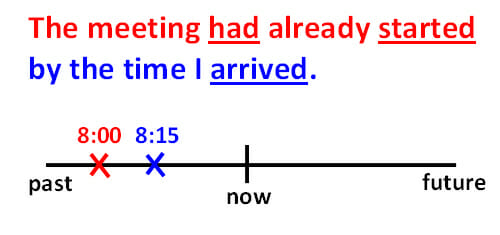
Past Simple vs. Past Perfect:


Exercises:

https://www.ego4u.com/en/cram-up/grammar/simpas-pasper/exercises

https://www.ego4u.com/en/cram-up/grammar/simpas-pasper/exercises?ex03

https://www.ego4u.com/en/cram-up/grammar/simpas-pasper/exercises?ex05